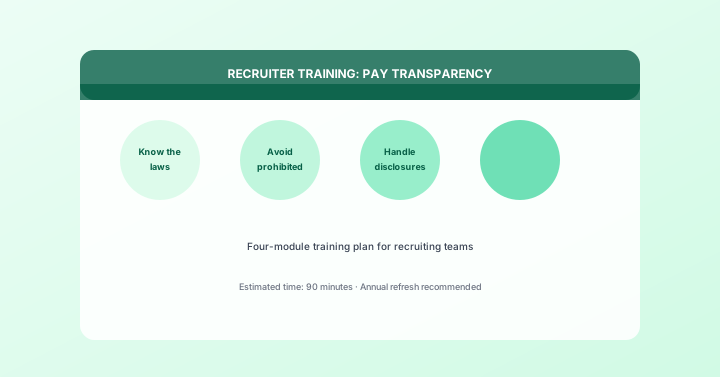
Pay transparency compliance fails most often not because companies lack policies — but because recruiters and hiring managers haven't been trained on what those policies mean in practice. A recruiter who asks "what are you currently making?" on a phone screen, or who posts "competitive salary" in a job ad, creates liability regardless of what the employee handbook says. This guide gives you a practical four-module training plan you can run internally.
Module 1: Which laws apply to your roles (30 min)
Start with the geography question, because it's the most misunderstood part of pay transparency training. Many recruiters assume the law that applies is where their company is headquartered. That is incorrect.
The rule: The law of the state where the candidate will be based applies — not where the company is based. For remote roles, if a candidate in any regulated state could realistically apply, that state's law applies to that posting.
Training exercise: give recruiters a list of 10 sample roles (mix of in-office, hybrid, and remote) and ask them to identify which laws apply. Walk through the correct answers together. Common mistakes:
- Thinking a Denver-headquartered remote role only needs Colorado compliance (it needs to meet whichever state the candidate is in, but Colorado is usually the strictest so it works as a floor)
- Thinking internal job postings don't need pay ranges (some states, including California, require ranges for internal transfer postings)
- Not knowing that New York State and NYC have separate laws that both apply to NYC postings
Module 2: Prohibited questions and language (20 min)
Cover three specific prohibitions that recruiters most commonly violate:
Salary history
In California, New York, Illinois, Colorado, Washington, Connecticut, and most EU countries, asking about an applicant's current or prior salary is prohibited. Train your team on:
- Never ask: "What are you currently making?" "What did you earn in your last role?" "What are your salary expectations based on your current comp?"
- Do ask: "What salary range are you targeting?" "Our range for this role is X–Y — does that work for you?"
- If a candidate volunteers prior salary, you cannot use it to set their offer
Discriminatory language in postings
Certain phrases in job ads are either illegal or create significant legal exposure. See the full guide to prohibited job ad phrases.
Vague compensation language
"Competitive salary," "DOE," "market rate," and "to be discussed" are not compliant in any state with active pay transparency law. Recruiters need to understand this is not a preference — it's a legal requirement.
Module 3: How to handle compensation conversations (20 min)
Recruiters are often anxious about discussing salary because they've been trained to stay vague. Pay transparency laws require the opposite. Train on these specific scenarios:
- "Can you give me a ballpark of your compensation expectations?" — Redirect: "Our range for this role is $X–$Y. Does that align with what you're looking for?"
- Candidate says "I'm currently making $150K, so I need at least $155K" — You can note they shared this but cannot use it. Respond based on your range and their qualifications only.
- Candidate asks why the range is wide — Explain that the final offer within the range is based on experience, skills, and internal equity. This is a legitimate and honest answer.
- Candidate asks for a higher offer than your max — You can explain that the range reflects the budget for this role and have a genuine conversation about fit. Avoid salary negotiation anchoring on prior earnings.
Module 4: Posting compliance checklist (20 min)
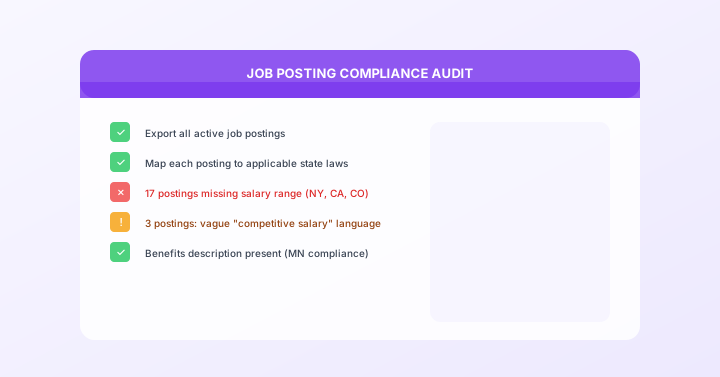
Give recruiters a pre-posting checklist they must complete before any job goes live. This creates accountability and catches issues before they become violations.
Annual refresh and knowledge checks
Pay transparency laws change every year — five new states activated in 2025 alone. Training needs to be refreshed annually, or when a significant new law takes effect in a state where you hire. Consider:
- A 30-minute annual refresh covering what changed since last year
- A short knowledge check (5–10 questions) to confirm understanding
- Completion tracking by manager so accountability is clear
- An easy escalation path: who does a recruiter call when unsure about a specific situation?