Pay transparency laws have moved from a niche regulatory curiosity to one of the most actively enforced areas of employment law in the United States and European Union. In the five years between 2021 and 2026, the number of US jurisdictions with active pay disclosure requirements went from one (Colorado) to more than fifteen — and every employer with a public careers page is affected.
This guide covers the foundations: what these laws actually require, which jurisdictions are active today, what the penalties look like, and how to build a sustainable compliance process that doesn't require a full-time compliance attorney to maintain.
What pay transparency laws actually require
At their core, pay transparency laws require employers to disclose compensation information on job postings. The most common requirements fall into three categories:
- Salary range disclosure: A minimum and maximum base salary or hourly rate for the position. Almost all active laws require this.
- Benefits disclosure: A description of benefits offered, including health insurance, retirement plans, and paid time off. Colorado and Washington require this; most other states do not yet.
- Bonus and commission disclosure: A description of any variable compensation. Again, Colorado and Washington are the strictest.
All active laws also require the disclosed range to be a "good faith" estimate — meaning it must genuinely reflect what the employer intends to pay. A $40,000–$400,000 range for a mid-level role won't satisfy the good faith standard. The NYC DCWP has indicated that ranges wider than approximately 35% of the midpoint may not qualify.
The US jurisdiction landscape in 2026
The pace of new legislation has been remarkable. Here's where things stand as of early 2026:
- Colorado (2021): First state, most demanding requirements. Salary range + benefits + bonus required for all employers.
- New York City (2022): $500,000 maximum aggregate fine. Employers with 4+ employees. Remote roles accessible to NYC residents are covered.
- California (2023): Employers with 15+ employees. Salary range required. Pay data reporting added.
- Washington (2023): Salary range + benefits + bonus. One of the most demanding state laws alongside Colorado.
- Illinois, New Jersey, Minnesota, Hawaii, Vermont (2024–2025): All passed salary range disclosure laws with varying thresholds. See our full 2025 state law roundup for details.
- Massachusetts (August 2026): Employers with 25+ employees. Governor Healey signed SB 1558 in January 2026.
The EU Pay Transparency Directive
While the US has been building a patchwork of state laws, the European Union took a comprehensive approach with Directive 2023/970/EU. The Directive requires all 27 member states to transpose its requirements into national law by June 2026. Key requirements include:
- Salary range or starting salary disclosed in all job postings
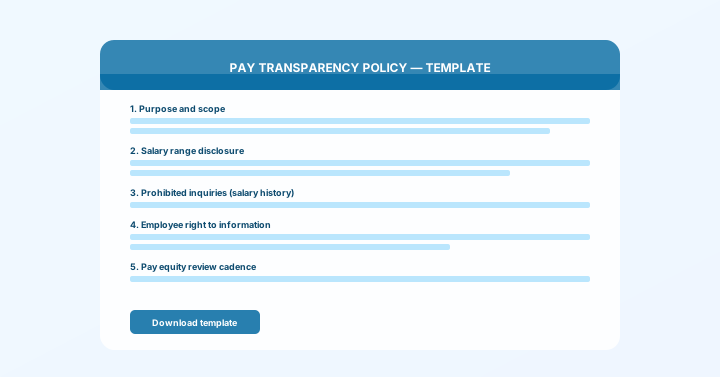
- Salary history questions banned entirely
- Right for employees to request pay information about colleagues in comparable roles
- Mandatory gender pay gap reporting for employers with 100+ employees from 2027
- 5% unexplained pay gap triggers a mandatory joint pay assessment
Germany, France, the Netherlands, and Ireland have already transposed. The remaining 23 member states must comply by May 2026. See our full EU Directive guide for complete details on what each country requires.
Who is covered — the remote work question
One of the most important and frequently misunderstood aspects of pay transparency laws is their extraterritorial scope. Most active laws cover roles that "could be performed" by a resident of the covered jurisdiction — not just roles where the employer has a physical presence.
This means a company headquartered in Texas posting a fully remote engineering role is covered by California's law (if any California resident could apply), Colorado's law, New York City's law, Washington's law, and every other active jurisdiction where a candidate might reasonably live. For national remote postings, the strictest requirements — currently Colorado and Washington — govern the posting.
Attempts to exclude state residents (e.g., "Not available in Colorado") have been scrutinised by multiple state agencies and are increasingly regarded as a non-compliant workaround. The practical solution is universal disclosure: include salary ranges and benefits on every posting, everywhere. See our remote work compliance guide for the full analysis.
What happens when you don't comply
Penalties vary significantly by jurisdiction:
- New York City: Up to $500,000 aggregate; first violations have settled in the $5,000–$50,000 range
- California: $100–$10,000 per violation; DFEH actively investigating
- Colorado: $500–$10,000 per violation; CDLE conducting proactive audits
- Washington: $500–$1,000 per violation for first offences, up to $5,000 for repeat
- Illinois, New Jersey: Up to $10,000 per violation; enforcement began in early 2026
Beyond the direct fines, the full cost of non-compliance is typically much larger when you factor in reduced application volume, legal fees from regulatory investigations, and employer brand damage on review platforms.
Building a sustainable compliance process
The companies that manage pay transparency compliance successfully share three characteristics:
1. Documented salary bands for every role. You cannot write a compliant job posting without knowing the approved compensation range for the role. Most organisations need to invest 4–8 weeks of HR and finance work to build and document salary bands before they can post compliantly at scale.
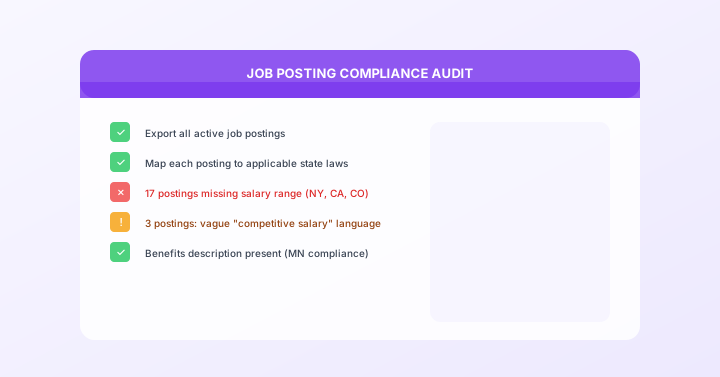
2. A posting review process that includes pay ranges. Every new posting and every significant edit should go through a checklist that verifies the salary range, EEO statement, ADA language, and any jurisdiction-specific requirements. See our EEOC job ad guide and OFCCP checklist for what to check.
3. Continuous monitoring — not periodic audits. Laws change quarterly. New states pass requirements. Enforcement guidance updates. Manual periodic audits miss the window between updates. Automated daily scanning — like what RoleComply provides — is the only way to maintain compliance at scale without a dedicated full-time compliance role.
Frequently asked questions
Do I need to post a salary range if I'm flexible on compensation? Yes. Post the range you'd genuinely consider. If you'd pay $80K–$120K depending on experience, post exactly that. The good faith standard doesn't require precision, but it does require honesty.
What if the role has no fixed salary — for example, commission-only sales? Most state laws have provisions for commission-only roles. You typically need to disclose the commission structure or OTE (on-target earnings) range rather than a base salary range.
Can I list different ranges for different states? Technically yes, but most compliance attorneys advise against it. The administrative burden is high, it can signal pay inequity, and it creates confusion for candidates applying from multiple locations.