Pay transparency isn't just about adding a salary range to a job posting. Done properly, it requires a coherent internal policy that covers how compensation ranges are set, disclosed, updated, and communicated to employees. This guide walks through everything a pay transparency policy needs to cover, with a template structure you can adapt.
Why a formal policy matters
Regulators increasingly look beyond individual job postings to ask whether an organisation has a systematic approach to pay transparency. A written policy demonstrates intent, guides recruiter behaviour, and gives employees a clear source of truth. It also protects you: if a posting is filed incorrectly, showing that you have a policy and training process demonstrates good-faith compliance effort.
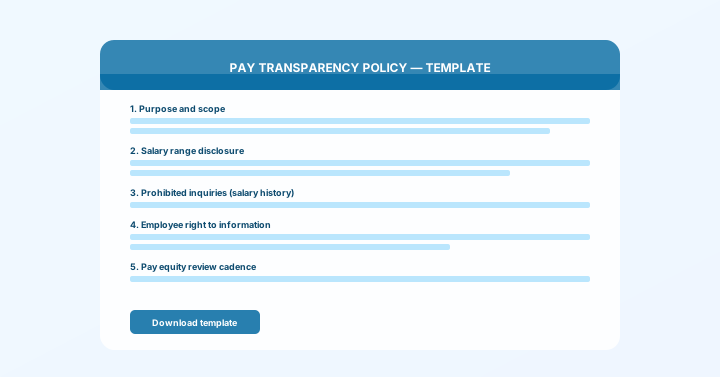
Section 1: Purpose and scope
Define what the policy covers and who it applies to. A strong scope clause reads something like:
Be explicit about geographic scope. If you hire remotely across multiple states and countries, your policy needs to acknowledge the layered nature of applicable law.
Section 2: Salary range setting
Define how ranges are established. This is the most important section — vague ranges that don't reflect real hiring intent create liability. Your policy should specify:
- Who sets pay ranges (Compensation/Total Rewards, with input from hiring manager and finance)
- What inputs go into range setting (market data sources, internal equity, role level)
- How often ranges are reviewed and updated (annually, or when market data shifts significantly)
- What "good faith" means for your organisation — typically, the range you would genuinely consider paying a qualified candidate
- How to handle roles with variable pay components (bonus, commission, equity)
Section 3: Disclosure requirements by jurisdiction
Rather than embedding legal citations in the policy itself (which age quickly), link to a jurisdiction matrix that your legal or HR ops team maintains. The policy text should say something like:
The matrix itself lists each state and country where you hire, the specific requirements, the effective date, and the penalty for non-compliance.
Section 4: Salary history prohibition
If you operate in any of the jurisdictions that ban salary history inquiries (California, New York, Illinois, Colorado, Washington, and most EU countries among others), your policy must explicitly prohibit it. This section should cover:
- Prohibition on asking candidates for current or prior salary, in any form — application, phone screen, or interview
- What to do if a candidate volunteers prior salary information (you may not use it to set their offer)
- How to handle salary history that appears on a resume or LinkedIn profile
Section 5: Employee rights to compensation information
Several laws give current employees the right to know the pay range for their own position or for open roles they're interested in. Your policy should affirm these rights and provide a clear mechanism:
- Employees may request the pay range for their own role at any time through HR
- Employees applying for internal transfers or promotions will be given the pay range for the new role
- The company will not retaliate against employees for requesting pay information or discussing compensation with colleagues
Section 6: Pay equity review cadence
A pay transparency policy without a pay equity review cadence is incomplete. State clearly:
- How often compensation is analysed for equity gaps (annually is standard)
- What dimensions are reviewed (gender, race/ethnicity, tenure, performance level)
- What happens when gaps are found (remediation budget, timeline, accountable owner)
- Whether you publish a pay gap report externally (required in some EU countries and British Columbia)
Implementation and training
A policy only works if the people involved in hiring know it exists and understand what it requires. Build training into your rollout:
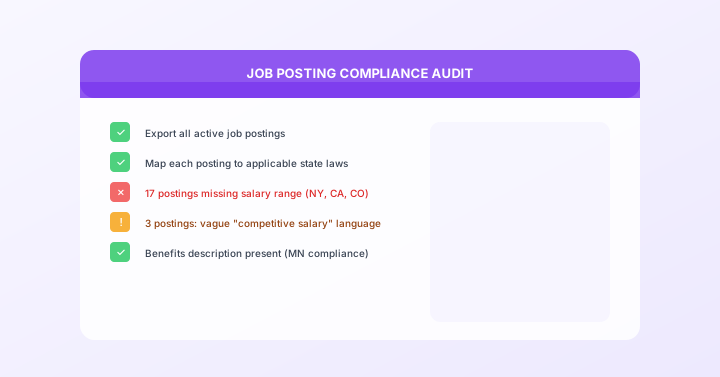
- Recruiters: Know which jurisdictions require what; know that "competitive salary" is not compliant; know how to handle salary history if volunteered
- Hiring managers: Understand they cannot share their own salary with candidates to use as an anchor; understand they cannot ask for prior pay history
- HR business partners: Know how to handle employee requests for pay range information; understand remediation process when gaps are found
Annual refresher training and a clear escalation path (who to ask when unsure) are essential to making the policy work in practice.