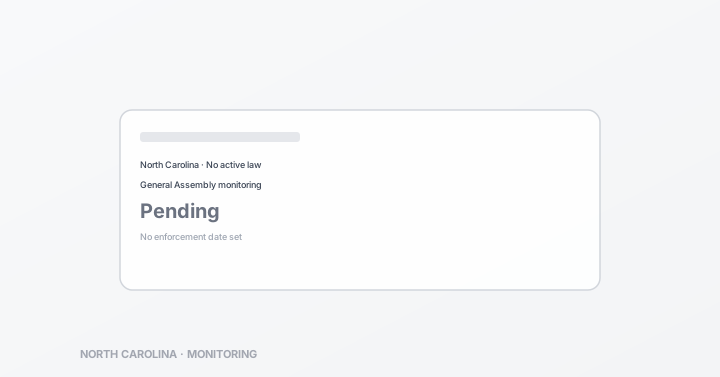
North Carolina does not have an active statewide pay transparency law as of early 2026. However, with over 30 US states and jurisdictions now actively monitoring or enacting pay transparency requirements, North Carolina employers face growing pressure — particularly from remote-role multi-state obligations and federal requirements.
Current status: no active state law
North Carolina's General Assembly has not passed a statewide pay transparency requirement mandating salary disclosure in job ads. Employers posting North Carolina-only roles are not currently required to disclose salary ranges under state law.
Federal requirements still apply
- Equal Pay Act: Requires equal pay for substantially equal work regardless of gender
- Title VII: Prohibits compensation discrimination based on protected characteristics
- OFCCP: Federal contractors must meet EEO disclosure and pay equity obligations
- NLRA: Employees have the right to discuss wages — employer gag policies are unlawful
Remote role obligations
North Carolina employers posting remote roles that candidates from other states can apply for must comply with the laws of those states. A remote role posted nationally means the strictest applicable law — typically Colorado or Washington — governs the posting. See the remote work compliance guide.
Charlotte — no city-level ordinance
Charlotte has no city-specific pay transparency ordinance as of 2026. North Carolina state law also preempts many local employment ordinances, limiting the ability of cities like Charlotte and Raleigh to enact independent requirements.
Proactive steps for NC employers
- ✓ Comply with federal EPA, Title VII, and OFCCP requirements
- ✓ For remote postings: apply salary ranges to meet other applicable state laws
- ✓ Consider proactive disclosure — candidates increasingly expect salary ranges
- ✓ Monitor RoleComply alerts for North Carolina legislative developments
How RoleComply monitors NC
RoleComply tracks state-level legislative activity across all 50 states. When North Carolina enacts pay transparency legislation, your scanning rules update automatically — and you'll receive a notification so your team can prepare.
What North Carolina employers must do
While specific legislation in North Carolina is still developing, the trend across the US makes proactive compliance the right strategy now. The NC Department of Labor is the authoritative source for compliance guidance and enforcement updates. Employers with any hiring activity in North Carolina should treat pay range disclosure as non-negotiable.
Audit every active posting. Review all roles advertised in North Carolina — on your own careers page, LinkedIn, Indeed, Glassdoor, and through any staffing agencies. Every posting needs a salary range. Check that your range is genuine — regulators and candidates alike can identify placeholder-wide ranges that bear no connection to actual pay.
Establish pay bands. A range on a job posting is only defensible if it connects to a documented compensation structure. Build pay bands for each role or level, benchmark against market data, and document the factors that explain variation within each band (experience, skills, location). This documentation protects you in enforcement situations and in employee conversations.
Train your recruiting team. Front-line recruiters need to understand what is required and what is prohibited. "Competitive salary", "DOE", salary history questions, and ranges that do not match the actual hiring budget are the most common violations — and all of them are preventable with basic training and updated posting templates.
Penalties and enforcement
Enforcement of US pay transparency laws has accelerated since 2023. New York City has issued fines ranging from $15,000 to over $250,000 for single violations. California's Civil Rights Department investigates complaints and requires remediation. The pattern is consistent across jurisdictions: initial enforcement targets large employers with visible non-compliance, then expands to mid-market companies as regulators build capacity. See our US state law roundup for current requirements across all states, or read our salary range best practices guide to learn how to write ranges that satisfy multiple state requirements simultaneously.